
Linova Software GmbH
Atlassian Migration and Integrated Service Management
Linova Software GmbH supports its customers throughout Germany in process digitization as well as the development and implementation of digital solutions. The company had just set up its own systems using Atlassian when news broke that the Australian company would “force” all customers to switch to cloud installations in the future.
To ensure the security of internal and customer data, Linova – like many others – had to carry out another migration. The migration tools from Hallo Welt! GmbH, in particular, but also the options for Integrated Service Management (IMS), quickly won them over. Today, they are pleased to have a single system where multiple systems were previously required.

“We Step in When Off-the-shelf Software Is No Longer Enough”
CEO Dr. Andreas Löhr is one of the leaders of a team of over 50 employees who develop custom software products. “We step in when off-the-shelf software is no longer sufficient or when customers have requirements that can no longer be met through customization or the configuration of standard software – in other words, when you have to roll up your sleeves and write the code yourself.” In addition, the company always provides its IT consulting services with a strong technical and business background.

Industry
IT Services, IT Consulting
Location
Munich, Fellbach
Product
Use case
Integrated Management System (IMS)
Website
Portrait
Linova Software GmbH was founded in 2008 by three managing directors and immediately began operations with software development and consulting projects in the automotive and aviation sectors. The company specializes in digital transformation projects for medium-sized and large enterprises. Linova is also active in the healthcare/medical technology and industrial sectors.
High Standards at Linova and Among Their Clients
Linova is a German IT consulting and software development company headquartered in Munich, with an additional office in Fellbach near Stuttgart. Founded in 2008, the company supports medium-sized and large enterprises with digital transformation projects, focusing on strategic consulting for digital transformation and AI, custom software development, process optimization and automation, data strategy, data analysis, and machine learning. Its portfolio also includes UX/UI design, the modernization of existing software, as well as cybersecurity and cloud consulting. Linova is primarily active in industries with high regulatory and process requirements, such as the automotive and aviation sectors, healthcare/medical technology, and the industrial sector in general.
On-Premises First, But Not Dogmatically
We’ve always been primarily an IT company, which is why we’ve done a lot in-house and built up expertise. We are – and have always been – pioneers because we have excellent employees and a great deal of expertise,” Löhr says with conviction. Not least for this reason, Linova has always adhered to the principle: “On-premises first” – meaning, “everything we can do locally, in our own data center, should be done there.” While on-premises IT always takes priority, the cloud is an acceptable alternative when there’s no other option.
To that end, Linova has built its own environment tailored to its software development needs, including ticketing systems and source code management, “We tried out a lot of different options and, like many others, eventually settled on Atlassian. We knew they weren’t the cheapest, but at least they offered an on-premises option and the ideal trio of Jira (ticket system), Confluence (knowledge management), and Bitbucket for source code management.”
But just two or three months after the move, the shocking news arrived in the form of the “Journey to the Cloud”: With these words, Atlassian announced significant price increases, especially for customers who wanted or needed to run on-premises installations – in some cases, increases of several hundred percent. “The discussions with Atlassian ultimately came to nothing, so it quickly became clear to us that we had to start looking again,” recalls Löhr. “We didn’t want to – and couldn’t – move to Atlassian’s cloud, partly because of our customers’ intellectual property.”
“The Atlassian Cloud Was Also Not an Option Because of Our Customers’ Intellectual Property.”
At the same time, Linova was preparing for four ISO certifications. This required a new system that would reflect the structures of the management system and take into account new customer requirements – not least with regard to supply chains and legal regulations.
Over the next few months, Linova successfully achieved compliance with the ISO standards 9001 (Quality Management), ISO 14001 (Environmental Management), ISO 27001 (Information Security), and ISO 45001 (Occupational Health and Safety). As expected, the certification processes also influenced the search for a replacement for Atlassian’s products: From the very beginning, the company sought a new system with core functions for Integrated Management Systems (IMS). “It starts with simple approvals and workflows, but ideally, an IMS can cover all management functions. The magic word is ‘integrated’” (Löhr).
A Search for IMS Leads to the BlueSpice Knowledge Management System
Although Linova had already worked with MediaWiki and Xwiki in the past, it quickly discarded many of those solutions. However, a renewed search for knowledge management systems with IMS integration brought the Munich-based company back to BlueSpice. The decision was based not only on regional proximity but also, and especially, on IMS support and the migration tools for Atlassian users.
“It wasn’t that long ago – the actual migration took place in 2025. We liked the licensing model and the option to set up the system locally, on a hosted server, or in the cloud. We got started right away with demo instances and test cases. We quickly realized that the things BlueSpice couldn’t do (yet) didn’t bother us that much – we could live with that. And then we had Hallo Welt! build forms for us.” (Löhr)

Image 1: Linova IMS Manual in BlueSpice
Largely Automated Migration from Atlassian
Right from the first step of the migration project, Linova set up an IMS in BlueSpice, in part to gain experience with it. It quickly became clear that the IMS in BlueSpice would also be suitable for the core business. The “areas” in Atlassian become “namespaces” in BlueSpice; this happens partly automatically and partly manually.
Linova doesn’t need farm mode; a wiki with over a hundred namespaces is sufficient, even though the company maps “every project and every committee to a separate namespace.” Thus, the business units (directly under management) became namespaces, as did the (Atlassian) areas for a wide variety of committees and working groups, and, logically, management itself has its own namespace.
The whole system has been working wonderfully for a year and a half now; Confluence is dead – “since the end of 2025, we’ve only been keeping it up for show, with employees no longer accessing it.” At Linova, over 50 people have BlueSpice access, plus customers with access, for a total of over 60 users.

Image 2: Linova IMS Manual in BlueSpice
The SMWQL Semantic Query Language and AI Functions Open up Unimagined Possibilities
Semantic MediaWiki Query Language, the query language in BlueSpice, enables Linova to use the software not only as a document repository but also as a repository for semantic information and, within certain limits, to query it intelligently. Löhr is very satisfied: “In principle, this replicates the basic functionalities of a relational database system; for example, you can query all systems on which a user has permissions. The AI functions are also exciting for us, especially because they support local models as well.”
Share this post!
 |
Unless otherwise stated, the news on this website is licensed under Creative Commons Attribution 4.0 International License. |
More success stories

BlueSpice as a Confluence Alternative at BMBF
The Federal Ministry of Education and Research migrated its main source of information from Confluence to BlueSpice MediaWiki.
Read more
+
Knowledge management at Digmesa AG
The market leader in the field of flow measurement technology uses BlueSpice pro Cloud as a central knowledge management system. Quality management is also to be integrated for even greater efficiency.
Read more
+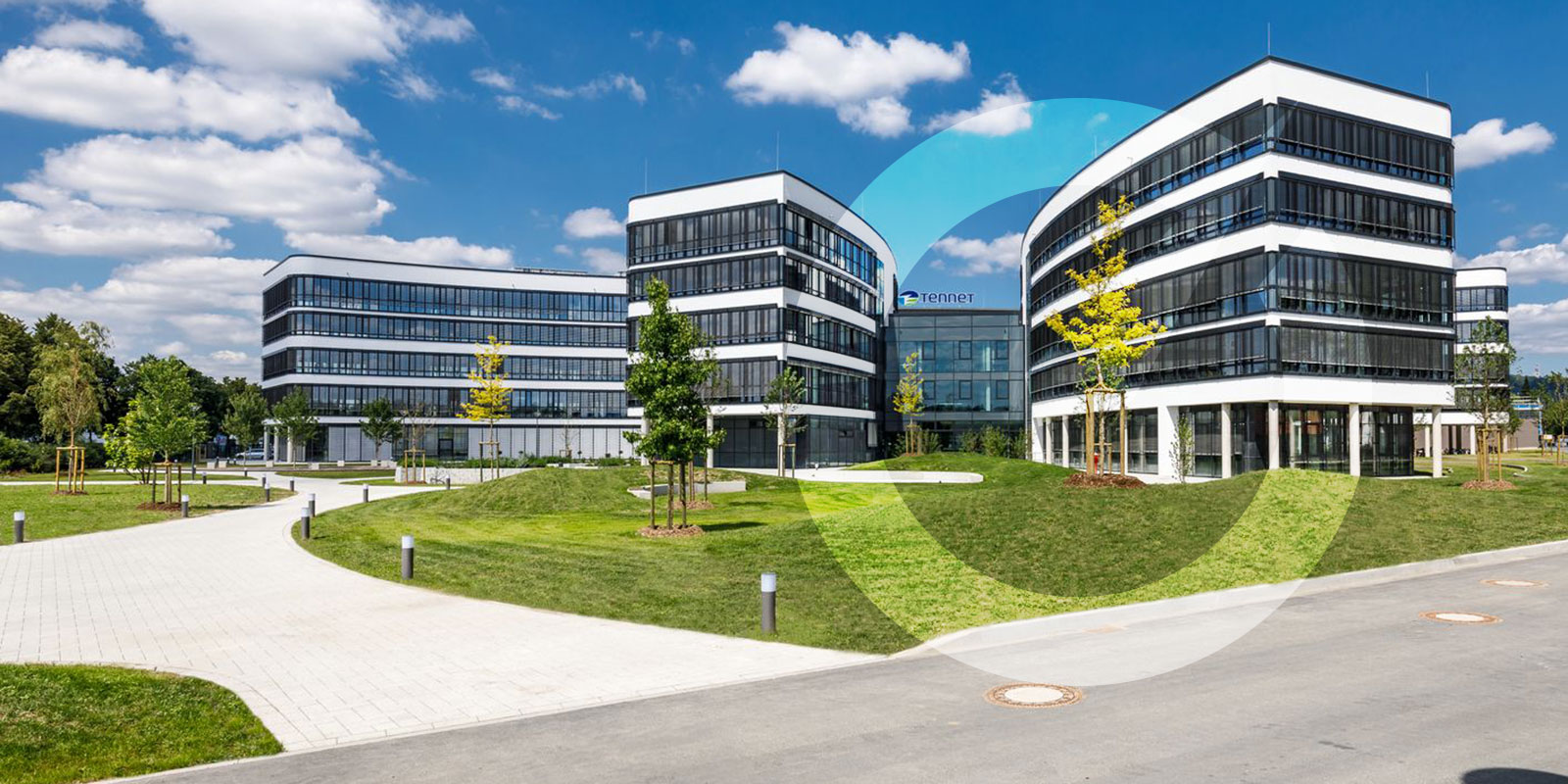
Organization manual for Tennet TSO
Initially intended as a reference book for the network operator’s construction and operating guidelines, BlueSpice has developed into a company-wide knowledge base with currently around 11,000 articles.
Read more
+